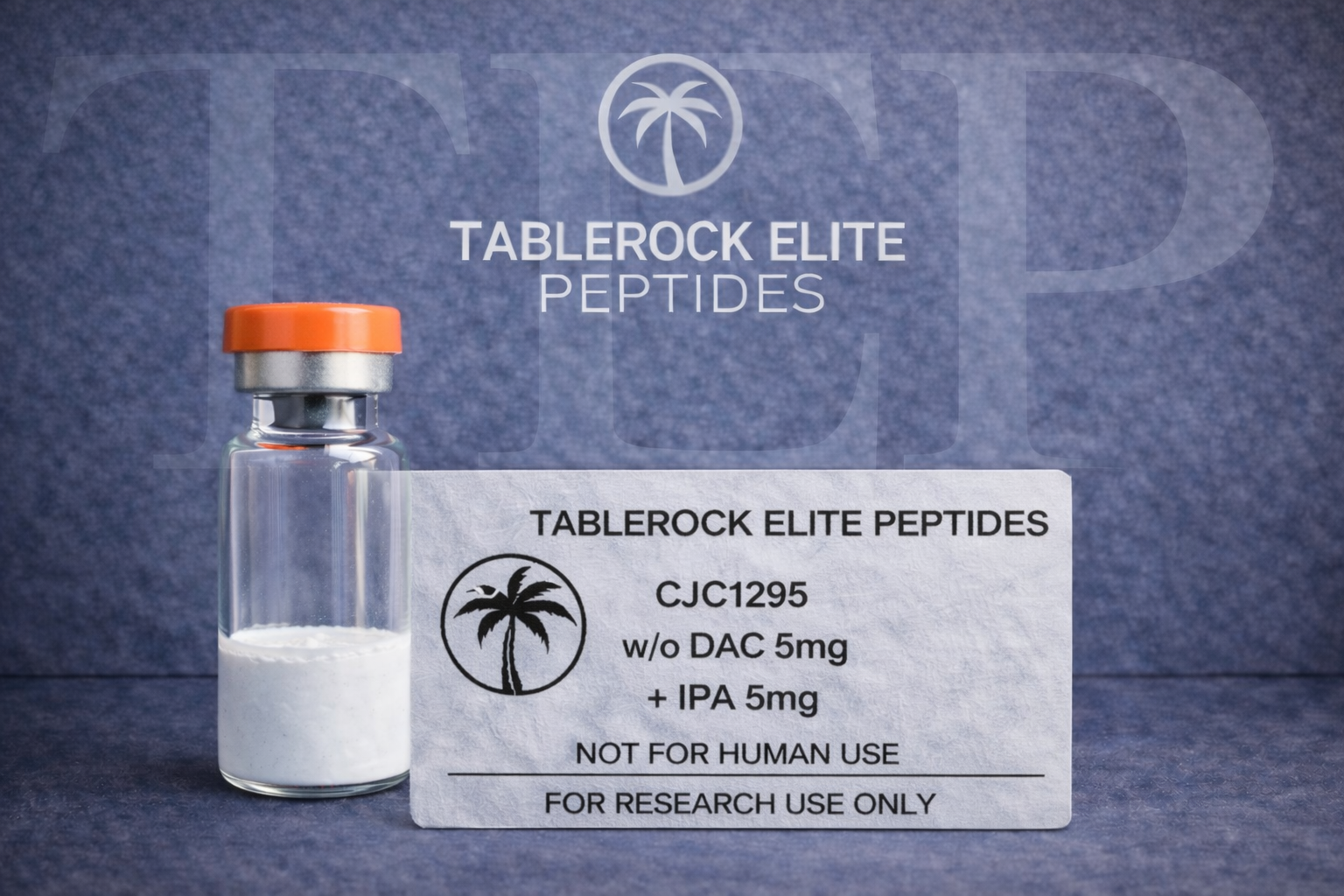
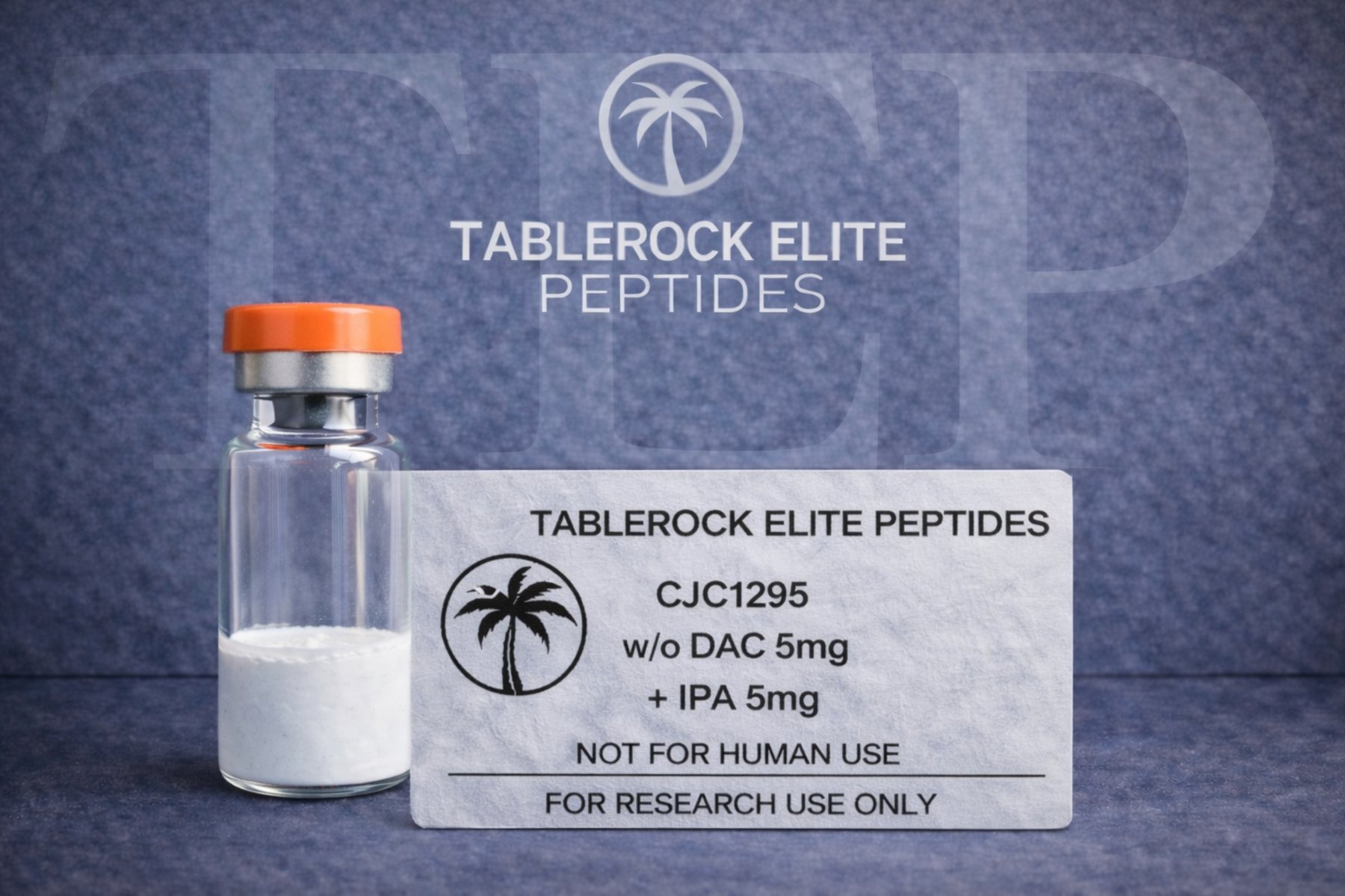
CJC1295 w/o DAC + IPA (5mg/5mg) – Research Peptide
$49.99
-
CJC-1295 (No DAC) + Ipamorelin – Research FAQ
Q: What is the CJC-1295 (No DAC) + Ipamorelin blend?
A: This product is a research-grade peptide blend combining CJC-1295 without Drug Affinity Complex (DAC), a growth hormone-releasing hormone (GHRH) analogue, with Ipamorelin, a peptide studied for its interaction with the ghrelin receptor.The combination is supplied as lyophilized research material for controlled laboratory investigation of endocrine signaling and peptide-receptor interactions.
Q: Why is CJC-1295 without DAC studied separately from DAC-modified CJC-1295?
A: The presence or absence of a Drug Affinity Complex changes important pharmacological characteristics of CJC-1295. The non-DAC form provides researchers with a model for investigating shorter-duration GHRH-receptor activity, temporal signaling patterns, and interactions with other experimental compounds.These differences allow researchers to compare how structural modifications can affect peptide behavior in experimental systems.
Q: What aspects of CJC-1295 and Ipamorelin are studied in research?
A: Experimental research involving these peptides has examined GHRH-receptor signaling, ghrelin-receptor signaling, endocrine pathway interactions, growth hormone-related signaling, and downstream GH/IGF-1 pathway biology.The significance of reported findings depends on the experimental model, study design, and available evidence. Findings from laboratory or animal studies should be interpreted within the methodology and limitations of the individual study and should not be interpreted as established clinical effects.
Q: What are GHRH and ghrelin receptors?
A: GHRH and ghrelin receptors are components of distinct but interconnected biological signaling systems.The GHRH receptor participates in signaling associated with growth hormone regulation, while the ghrelin receptor—also known as the growth hormone secretagogue receptor (GHS-R)—is involved in several neuroendocrine signaling pathways.
Studying compounds that interact with these different receptors allows researchers to investigate receptor activity, signaling relationships, and interactions among endocrine pathways.
Q: What is the GH/IGF-1 axis?
A: The GH/IGF-1 axis refers to the interconnected signaling relationship involving growth hormone (GH) and insulin-like growth factor 1 (IGF-1).Researchers study this system to better understand endocrine signaling, feedback mechanisms, receptor activity, and associated molecular and biochemical responses. References to the GH/IGF-1 axis describe an area of scientific investigation and do not establish a therapeutic effect of this research material.
Q: Are peptide quantities the same in every CJC-1295 / Ipamorelin research blend?
A: No. Composition and ratios can differ among research materials. Researchers should verify the identity, quantity, and composition of each peptide using the product label and available analytical documentation or Certificate of Analysis (COA) before incorporating a material into an experimental design.Q: How should the lyophilized CJC-1295 / Ipamorelin research material be stored?
A: Laboratory storage and handling should follow applicable institutional procedures, supplier documentation, and established laboratory practices for peptide research materials. Researchers should minimize unnecessary exposure to heat, light, moisture, and repeated temperature changes that could affect material integrity.Q: Does Tablerock provide human dosing, administration, or treatment guidance for this blend?
A: No. Tablerock Elite Peptides does not provide dosing, injection, treatment, therapeutic protocols, or self-administration instructions for this research material.Q: Is the CJC-1295 (No DAC) + Ipamorelin blend intended for human or veterinary use?
A: No. This product is sold strictly for laboratory research purposes. It is not intended for human or veterinary administration, consumption, diagnosis, treatment, prevention, or other clinical use.Research Use Only. Not for Human or Veterinary Use.
15 in stock
Description
CJC-1295 (No DAC) 5 mg + Ipamorelin 5 mg – Research Peptide Blend
Overview
CJC-1295 (No DAC) 5 mg + Ipamorelin 5 mg is a synthetic peptide blend supplied as a lyophilized research material for controlled laboratory and analytical investigation.
The blend combines CJC-1295 without DAC, a GHRH-receptor-active research peptide, with Ipamorelin, a growth hormone secretagogue receptor (GHSR) agonist. The combination allows researchers to investigate interactions between GHRH-associated and ghrelin-receptor-associated signaling pathways within defined experimental systems.
Material Information
- Component 1: CJC-1295 without DAC
- CJC-1295 (No DAC) quantity: 5 mg
- Component 2: Ipamorelin
- Ipamorelin quantity: 5 mg
- Total peptide content: 10 mg
- Form: Lyophilized research material
- Container: Single sealed research vial
- Intended use: Laboratory research use only
Researchers should refer to the product label and applicable batch-specific analytical documentation when evaluating material identity, quantity, purity, and other characteristics.
What Does “No DAC” Mean?
DAC refers to Drug Affinity Complex, a modification associated with prolonged activity of certain CJC-1295 research compounds.
CJC-1295 identified as without DAC is investigated separately from DAC-modified material because differences in molecular configuration can influence experimental characteristics, including receptor interaction and duration of signaling activity.
Researchers should distinguish between DAC and non-DAC materials when evaluating experimental literature, comparing research materials, or designing studies.
Research Characteristics
CJC-1295 (No DAC) and Ipamorelin interact with different receptor systems.
Experimental research involving these peptides may examine:
- GHRH receptor activity;
- Growth hormone secretagogue receptor (GHSR) activity;
- Peptide-receptor interactions;
- Endocrine signaling pathways;
- Receptor-associated signal transduction;
- Interactions between GHRH- and ghrelin-associated signaling;
- Comparative peptide activity; and
- Molecular or biochemical markers associated with receptor activation.
Combining the two research peptides within a single material allows investigators to examine two distinct receptor-associated signaling mechanisms within appropriately designed experimental systems.
The presence of a pathway, marker, mechanism, or experimental response in published research does not establish safety, effectiveness, or suitability for human or veterinary use.
Laboratory Research Applications
CJC-1295 (No DAC) + Ipamorelin may be investigated in controlled experimental models involving:
- Receptor pharmacology: Investigation of GHRH and growth hormone secretagogue receptor interactions, activation, and signaling behavior.
- Endocrine signaling: Examination of molecular pathways associated with GHRH- and GHSR-related receptor activity.
- Signal-transduction research: Investigation of downstream molecular and biochemical responses associated with receptor activation.
- Peptide-interaction research: Examination of signaling behavior when two receptor systems are investigated within the same experimental model.
- Comparative peptide research: Comparison with individual GHRH-related or GHSR-related research compounds under defined experimental conditions.
- Analytical research: Characterization of material identity, purity, stability, and related properties.
Experimental design, concentrations, controls, endpoints, and interpretation of findings are determined by the individual laboratory or research protocol.
Handling and Storage
The lyophilized CJC-1295 (No DAC) + Ipamorelin research material should be handled according to applicable institutional procedures, product documentation, and established laboratory practices for peptide research materials.
The material should generally be maintained:
- Sealed and protected from moisture;
- Protected from unnecessary exposure to light and heat;
- Under appropriate refrigerated or frozen laboratory storage conditions; and
- In a manner that minimizes unnecessary temperature fluctuations.
Prepared laboratory solutions should be handled according to the applicable experimental protocol and institutional standard operating procedures.
Appropriate laboratory PPE, aseptic practices, chemical-hygiene procedures, and disposal requirements should be followed.
Technical Summary
| Parameter | Details |
|---|---|
| Product | CJC-1295 (No DAC) 5 mg + Ipamorelin 5 mg |
| CJC-1295 (No DAC) | 5 mg |
| Ipamorelin | 5 mg |
| Total peptide content | 10 mg |
| Form | Lyophilized research material |
| Research focus | Receptor pharmacology, endocrine signaling, peptide-receptor interactions, and associated molecular pathways |
| Intended use | Laboratory research use only |
| Human/veterinary use | Not intended for human or veterinary use |
No Dosing or Administration Guidance
Tablerock Elite Peptides does not provide or endorse human or veterinary dosing, administration, injection, treatment protocols, reconstitution-for-human-use instructions, or self-administration guidance for CJC-1295 (No DAC) + Ipamorelin.
Research Use Only
This CJC-1295 (No DAC) 5 mg + Ipamorelin 5 mg research material is supplied exclusively for laboratory research use.
It is not supplied as a prescription drug, compounded medication, dietary supplement, cosmetic, or other finished pharmaceutical product and is not intended for human or veterinary use.
It must not be used for human or animal injection, ingestion, consumption, self-administration, diagnosis, treatment, cure, mitigation, prevention, or any other clinical or therapeutic purpose.
Research Use Only. Not for Human or Veterinary Use.
Disclaimer: For laboratory research use only. This product is not intended for human consumption, injection, or ingestion.
Reviews
There are no reviews yet.