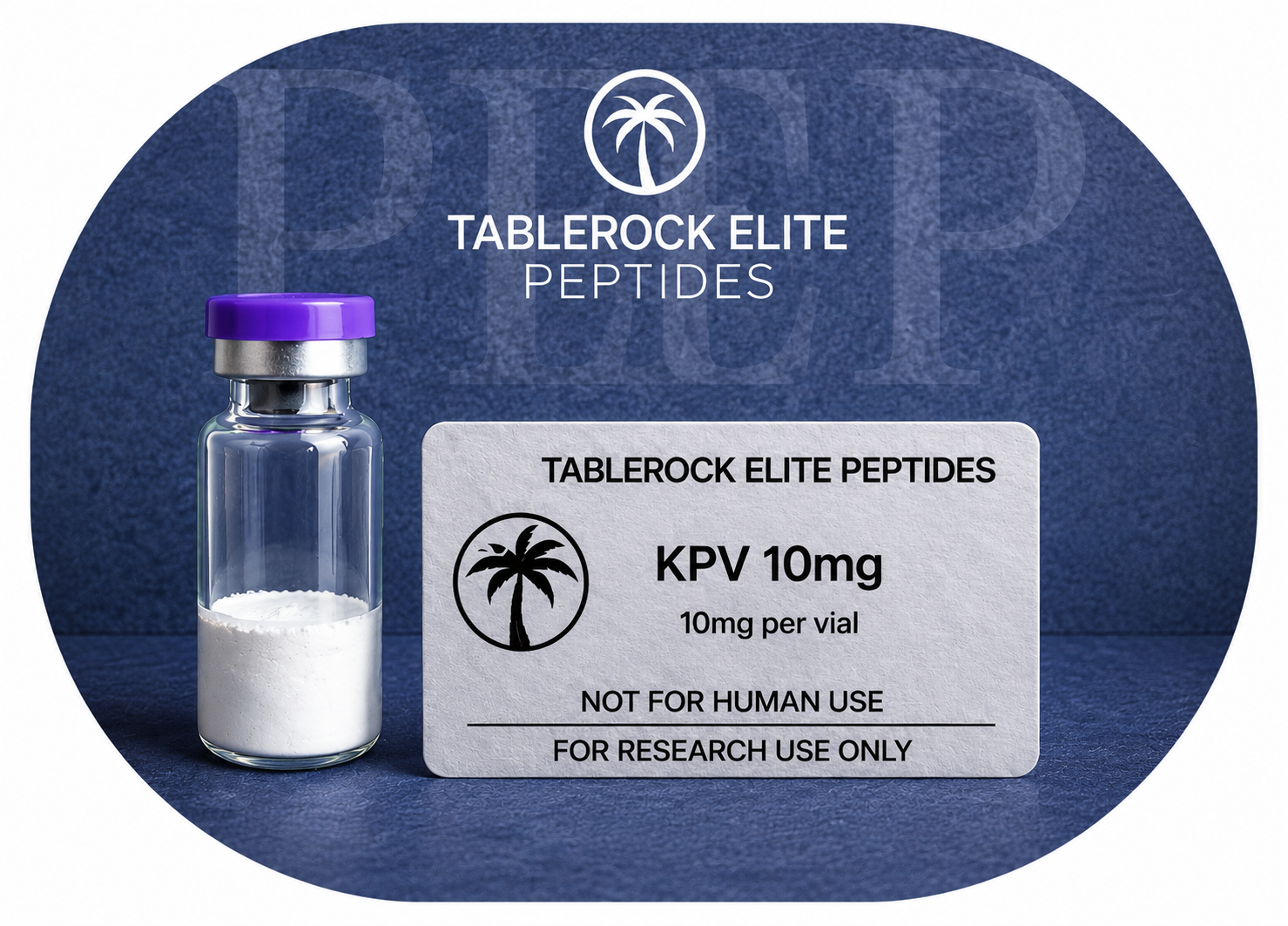
KPV – 10 mg – Research Peptide
$74.99
-
KPV 10 mg – Research FAQ
Q: What is KPV 10 mg?
A: KPV 10 mg is a synthetic tripeptide composed of lysine, proline, and valine (Lys-Pro-Val). Each vial contains 10 mg of lyophilized research material intended for controlled laboratory and analytical investigation.KPV corresponds to the C-terminal three-amino-acid sequence of alpha-melanocyte-stimulating hormone (α-MSH) and is also referenced in scientific literature as the α-MSH (11–13) fragment.
Q: What areas of research involve KPV?
A: KPV has been investigated in experimental research involving cellular signaling, epithelial biology, inflammatory-response-associated pathways, peptide transport, melanocortin-derived peptide activity, and innate host-defense-associated mechanisms.Research findings vary according to experimental model, methodology, and study design and should not be interpreted as established clinical effects.
Q: What is the relationship between KPV and α-MSH?
A: KPV represents the three C-terminal amino acids—Lys-Pro-Val—of the larger α-MSH peptide.Researchers may use KPV as an experimental material to investigate biological activity associated with this specific peptide fragment and compare its characteristics with α-MSH or other melanocortin-derived research peptides.
KPV should not be assumed to possess all of the biological characteristics of the complete α-MSH peptide.
Q: Why is NF-κB associated with KPV research?
A: NF-κB refers to a family of proteins involved in regulation of gene expression and numerous cellular signaling processes.Experimental research involving KPV has examined NF-κB-associated pathways and related molecular responses under defined laboratory conditions. Observation of changes within these pathways does not by itself establish an anti-inflammatory or therapeutic effect.
Q: What is PepT1 and why does it appear in KPV research?
A: PepT1 is a peptide transporter involved in the transport of certain small peptides across cellular membranes.KPV has been investigated in experimental systems examining PepT1-associated transport, making peptide uptake and transport mechanisms an area of laboratory interest involving this research material.
Q: Why are microbial systems sometimes studied with KPV?
A: Experimental research has examined KPV and related α-MSH-derived peptides in laboratory systems involving selected microorganisms and innate host-defense-associated mechanisms.These studies investigate peptide-microorganism interactions and associated molecular responses. Laboratory observations should not be interpreted as demonstrating antimicrobial effectiveness or suitability for treating infections.
Q: Are findings from KPV research considered established clinical effects?
A: No. Findings obtained from biochemical, cellular, animal, or other experimental models must be interpreted within the methodology and limitations of the individual study.Research involving signaling pathways, biomarkers, microorganisms, or experimental models does not establish that KPV is safe, effective, or suitable for human or veterinary use.
Q: Is KPV 10 mg an approved pharmaceutical product?
A: No. KPV 10 mg sold by Tablerock Elite Peptides is supplied solely as a laboratory research material. It is not manufactured, labeled, or supplied as an approved pharmaceutical, cosmetic, antimicrobial, or therapeutic product.Q: How should KPV 10 mg research material be stored?
A: Lyophilized KPV should generally be maintained sealed, dry, protected from light and moisture, and under appropriate refrigerated or frozen laboratory conditions.Prepared laboratory solutions should be handled according to the applicable experimental protocol, product documentation, and institutional standard operating procedures.
Q: Does Tablerock provide dosing or administration instructions for KPV 10 mg?
A: No. Tablerock Elite Peptides does not provide or endorse human or veterinary dosing, administration, injection, ingestion, topical application, treatment protocols, reconstitution-for-human-use instructions, or self-administration guidance for KPV.Q: Is KPV 10 mg intended for human or veterinary use?
A: No. KPV 10 mg is supplied strictly for laboratory research use only. It must not be used for human or animal injection, ingestion, consumption, topical application, self-administration, diagnosis, treatment, cure, mitigation, prevention, or any other clinical, cosmetic, or therapeutic purpose.Research Use Only. Not for Human or Veterinary Use.
18 in stock (can be backordered)
Description
KPV 10 mg – Research Peptide
Overview
KPV 10 mg is a synthetic tripeptide composed of lysine, proline, and valine (Lys-Pro-Val), supplied as a lyophilized research material for controlled laboratory and analytical investigation.
KPV corresponds to the C-terminal three-amino-acid sequence of alpha-melanocyte-stimulating hormone (α-MSH) and is also referenced in scientific literature as the α-MSH (11–13) fragment.
KPV has been investigated in experimental systems involving inflammatory signaling pathways, epithelial biology, peptide transport, melanocortin-derived peptide activity, and innate host-defense-associated mechanisms.
Findings involving KPV remain experimental and should be interpreted according to the methodology, experimental model, and limitations of the individual study. They do not establish clinical effectiveness or suitability for human or veterinary use.
Material Information
- Research material: KPV
- Quantity: 10 mg
- Sequence: Lys-Pro-Val
- Peptide length: 3 amino acids
- Related sequence: C-terminal α-MSH (11–13) fragment
- Classification: Synthetic tripeptide
- Form: Lyophilized research material
- Container: Single sealed research vial
- Intended use: Laboratory research use only
Researchers should refer to the product label and applicable batch-specific analytical documentation when evaluating material identity, quantity, purity, and other characteristics.
What Is KPV?
KPV is a three-amino-acid peptide corresponding to the terminal Lys-Pro-Val sequence of α-MSH.
Its compact structure has made KPV useful as an experimental research material for investigating biological activity associated with specific portions of the larger α-MSH peptide without assuming that KPV possesses all characteristics of the complete parent peptide.
Experimental research has examined KPV in connection with cellular signaling, epithelial systems, peptide-transport mechanisms, inflammatory mediators, and host-defense-associated pathways.
Research Characteristics
Experimental research involving KPV may examine:
- NF-κB-associated signaling;
- Cytokine-associated pathways;
- Cellular inflammatory-response mechanisms;
- Epithelial cell biology;
- Peptide transport mechanisms;
- PepT1-associated transport;
- Melanocortin-derived peptide signaling;
- Innate host-defense-associated mechanisms;
- Peptide-microorganism interactions; and
- Comparative activity of α-MSH-derived peptide fragments.
These areas describe subjects of scientific investigation and do not represent established clinical, antimicrobial, anti-inflammatory, or therapeutic effects.
The observation of a molecular pathway, biomarker, or experimental response does not establish safety, effectiveness, or suitability for human or veterinary use.
Laboratory Research Applications
KPV may be investigated in controlled experimental models involving:
- Cellular signaling research: Investigation of NF-κB-associated, cytokine-associated, and related molecular pathways.
- Epithelial biology: Examination of cellular and molecular responses involving epithelial experimental systems.
- Peptide-transport research: Investigation of peptide uptake and transport mechanisms, including PepT1-associated pathways.
- Melanocortin-fragment research: Comparison of KPV with α-MSH and related peptide fragments.
- Host-defense research: Laboratory investigation of peptide interactions involving selected microbial and immune-associated experimental systems.
- Comparative peptide research: Comparison of KPV with other short peptide research materials.
- Analytical research: Characterization of material identity, purity, stability, and related properties.
Experimental design, concentrations, controls, endpoints, and interpretation of findings are determined by the individual laboratory or research protocol.
Handling and Storage
KPV research material should be handled according to applicable institutional procedures, product documentation, and established laboratory practices for peptide research materials.
The lyophilized material should generally be maintained:
- Sealed and protected from moisture;
- Protected from unnecessary exposure to light and heat;
- Under appropriate refrigerated or frozen laboratory storage conditions; and
- In a manner that minimizes unnecessary temperature fluctuations.
Prepared laboratory solutions should be handled according to the applicable experimental protocol and institutional standard operating procedures. Repeated freeze-thaw cycles should be minimized where appropriate.
Appropriate laboratory PPE, aseptic practices, chemical-hygiene procedures, and disposal requirements should be followed.
Technical Summary
| Parameter | Details |
|---|---|
| Product | KPV 10 mg |
| Quantity | 10 mg |
| Sequence | Lys-Pro-Val |
| Peptide length | 3 amino acids |
| Related sequence | C-terminal α-MSH (11–13) fragment |
| Classification | Synthetic tripeptide |
| Form | Lyophilized research material |
| Research focus | Cellular signaling, epithelial biology, peptide transport, melanocortin-derived peptide activity, host-defense-associated mechanisms |
| Intended use | Laboratory research use only |
| Human/veterinary use | Not intended for human or veterinary use |
No Dosing or Administration Guidance
Tablerock Elite Peptides does not provide or endorse human or veterinary dosing, administration, injection, ingestion, topical application, treatment protocols, reconstitution-for-human-use instructions, or self-administration guidance for KPV 10 mg.
Research Use Only
KPV 10 mg sold by Tablerock Elite Peptides is supplied exclusively for laboratory research use.
It is not supplied as a prescription drug, compounded medication, dietary supplement, cosmetic, antimicrobial product, or other finished pharmaceutical product and is not intended for human or veterinary use.
It must not be used for human or animal injection, ingestion, consumption, topical application, self-administration, diagnosis, treatment, cure, mitigation, prevention, or any other clinical, cosmetic, or therapeutic purpose.
Research Use Only. Not for Human or Veterinary Use.
Disclaimer: For laboratory research use only. This product is not intended for human consumption, injection, or ingestion.
Reviews
There are no reviews yet.